What is an active harmonic filter and how does it work?
An active harmonic filter is a power quality solution that reduces harmonic distortion in electrical networks. It continuously monitors harmonic currents and dynamically compensates for them, helping keep the electrical system efficient, reliable, and within required power quality limits.
But what exactly does an active harmonic filter do, why are harmonics a problem, and when is active harmonic filtering the right solution? In this article, we explain the basics without making things unnecessarily complicated.
What is an active harmonic filter?
An active harmonic filter (AHF) is a power electronic device used to reduce harmonic distortion caused by non-linear loads.
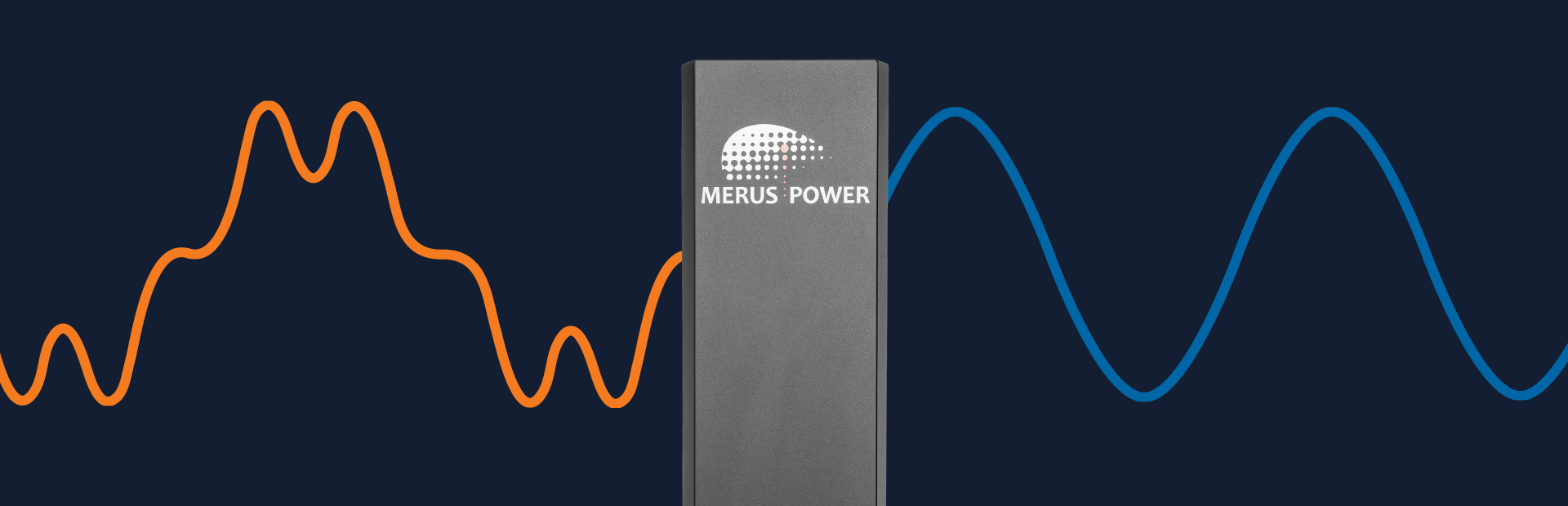
Non-linear loads are common in modern electrical systems. Variable Frequency Drives (VFDs), UPS systems, rectifiers, LED lighting, and other power electronic equipment do not always draw current as a smooth sine wave. Instead, they create harmonic currents that distort the electrical waveform. An active harmonic filter continuously measures these currents and generates a compensating current that cancels the unwanted harmonics. The result is a cleaner current waveform and lower Total Harmonic Distortion of current (THDi).
In simple terms, an active harmonic filter cleans up the electrical current before harmonic distortion can cause problems elsewhere in the network.
Why are harmonics a problem?
A perfect AC electrical waveform is sinusoidal. However, non-linear electrical loads can distort that waveform by drawing currents at multiples of the fundamental frequency. These are known as harmonics.
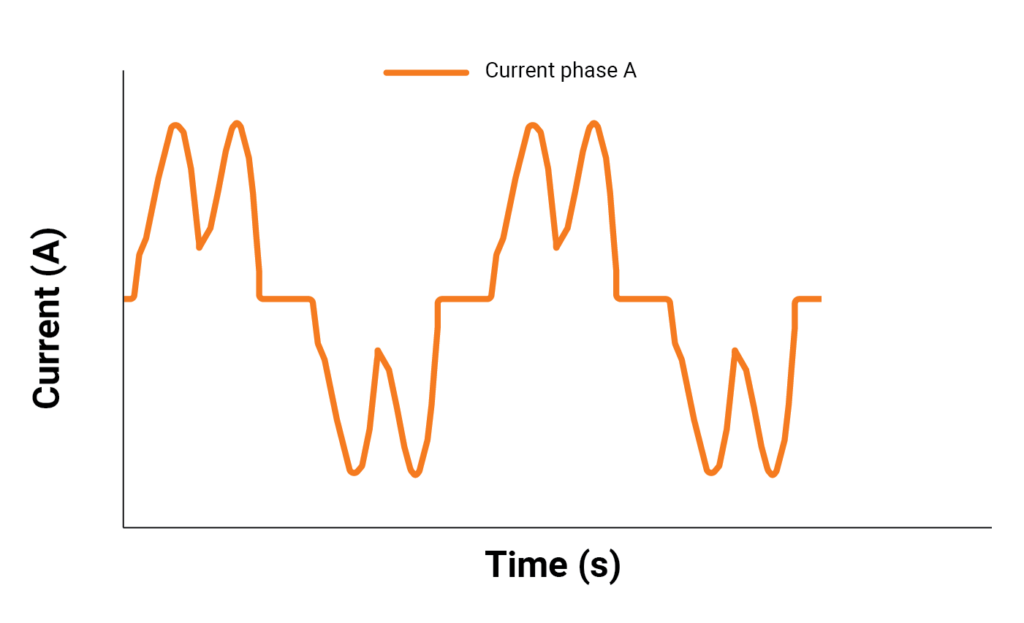
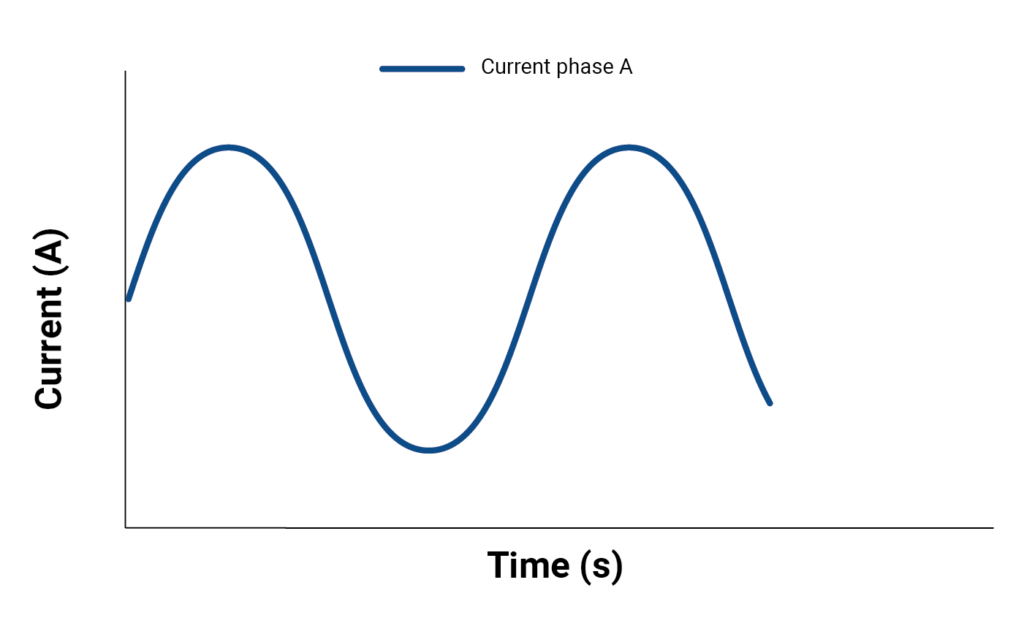
As more power electronic equipment is connected to an electrical network, harmonic distortion can become increasingly significant. High harmonic distortion can contribute to:
| Harmonic issue | What it means for your facility |
|---|---|
| Equipment overheating | Shorter equipment life → higher maintenance and replacement costs |
| Electrical losses | Energy is wasted as heat → higher electricity costs |
| Reduced system capacity | Less capacity for useful loads → less room for production or expansion |
| Nuisance tripping | Processes can stop unexpectedly → downtime and lost production |
| Difficulty meeting power quality requirements | Harmonic limits may be exceeded → corrective measures and additional costs |
Variable Frequency Drives are among the most common sources of harmonic currents in industrial and commercial electrical systems.
How does an active harmonic filter work?
The working principle of an active harmonic filter can be compared to that of noise-canceling headphones.
Noise-canceling headphones listen to unwanted sound and produce an opposite sound wave to cancel it. An active harmonic filter applies a similar principle to electrical currents. The process can be simplified into four steps:
- Measure: The active harmonic filter continuously measures the current in the electrical network.
- Analyze: Its control system identifies the harmonic components that need to be compensated.
- Compensate: The filter generates an equal current with the opposite phase.
- Cancel: The compensating current cancels the harmonic current, leaving the supply with a much cleaner current waveform.
This process happens continuously. As operating conditions change, the active harmonic filter adjusts its compensation accordingly. For example, if VFDs significantly reduce the load or stop during production, the required harmonic compensation changes and the active harmonic filter immediately reacts to the change. This dynamic operation is one of the biggest advantages of active harmonic filtering. Merus® A2 Active Harmonic Filter uses this principle to dynamically compensate harmonic distortion from individual loads or multiple loads connected to the same electrical system.
Where are active harmonic filters used?
Active harmonic filters can be used wherever non-linear loads cause significant harmonic distortion. Typical applications include:
- Variable Frequency Drive (VFD) installations: VFDs are widely used for motors, pumps, fans, compressors, and other equipment across many industries.
- HVAC systems: Chillers, pumps, air handling units, cooling towers, and compressors increasingly rely on VFDs.
- Data centers: UPS systems, cooling equipment, and other power electronics create demanding power quality conditions.
- Water and wastewater treatment: Pumps and blowers often operate through VFDs, creating significant non-linear loads.
- Industrial facilities: Production machinery, welding equipment, rectifiers, and motor drives can all contribute to harmonic distortion.
- Commercial buildings: HVAC systems, elevators, UPS systems, and lighting can introduce harmonics into the electrical network.
For example, modern HVAC installations can contain many VFD-controlled loads operating at different levels throughout the day. A dynamic solution can therefore compensate the actual harmonic load rather than being designed around only one fixed operating condition.
What are the benefits of an active harmonic filter?
The main advantage of an active harmonic filter is that it responds dynamically to the electrical network.
- Dynamic harmonic compensation: An AHF continuously adapts its compensation as loads change. This makes active harmonic filtering especially suitable for facilities with variable operating conditions.
- Multiple harmonics can be compensated: Active harmonic filters can compensate several harmonic orders simultaneously rather than being designed around only one specific harmonic frequency.
- Centralized compensation is possible: A single active harmonic filter can be installed to compensate several loads simultaneously.
For example, instead of selecting a separate harmonic mitigation solution for every VFD, an active harmonic filter can be installed at a common distribution point to compensate the combined harmonic load. This can simplify system design and make future expansion easier.
- More than harmonic mitigation: Advanced active harmonic filters can provide additional power quality functions. For example, Merus® A2 can combine active harmonic filtering with dynamic reactive power compensation, current balancing, neutral current compensation, and harmonic-specific resonance damping.
- Flexible installation: Active harmonic filters are connected in parallel with the loads. They can therefore be integrated into new electrical systems or used to improve power quality in existing installations.
Active vs. passive harmonic filters
Active and passive harmonic filters both reduce harmonic distortion, but they work differently.
A passive harmonic filter is typically designed for specific harmonic frequencies. It can be a suitable solution when the harmonic load is stable and predictable. An active harmonic filter monitors the electrical network and dynamically adjusts its compensation.
This makes active harmonic filtering particularly useful when:
- Loads vary over time
- Several VFDs or other non-linear loads are connected
- Multiple harmonic orders need to be compensated
- The electrical system may be expanded later
- Centralized harmonic compensation is preferred
There is no single harmonic mitigation technology that is best for every electrical system. The correct solution depends on the network, loads, harmonic spectrum, required performance, and project economics.
What about Active Front End drives?
Active Front End (AFE) drives are another way to reduce the harmonic distortion associated with motor drives. However, the approach is different. An AFE is part of an individual drive, whereas a centralized active harmonic filter can compensate several standard VFDs and other non-linear loads simultaneously.
This separation also means that the harmonic filter operates independently from motor control. If the active harmonic filter is temporarily unavailable, the VFD-controlled process can continue operating, although harmonic compensation is temporarily lost.
For installations with several VFDs, centralized active harmonic filtering can therefore provide an attractive combination of harmonic performance, redundancy, flexibility, and lifecycle cost.
How do you know if you need an active harmonic filter?
You cannot always identify a harmonic problem simply by looking at the electrical installation. Unexpected equipment behavior, overheating, nuisance tripping, or power quality compliance problems can indicate that further investigation is needed. However, measurements provide a much better basis for making decisions.
A power quality measurement can identify the level and harmonic spectrum of distortion in the electrical network. The results can then be used to determine whether harmonic mitigation is needed and how much compensation should be installed.
You can also use Merus Power’s harmonic calculator for preliminary active harmonic filter sizing.
Power quality standards and harmonic limits
Harmonic distortion is also considered in international power quality standards and grid requirements. Common standards include IEEE 519 and EN 50160, while utilities and grid operators may have additional requirements for individual installations.
IEEE 519, for example, establishes harmonic limits at the Point of Common Coupling (PCC). The acceptable harmonic current levels depend partly on the characteristics and strength of the electrical network.
For engineers working with IEEE 519, understanding how harmonic limits are calculated is therefore important.
Not all active harmonic filters are the same
Once active harmonic filtering has been identified as the right technology, the next question is which active harmonic filter to choose.
There can be significant differences in inverter topology, control algorithms, response speed, efficiency, scalability, user interface, installation options, and additional power quality functionality.
This is where the design of the active harmonic filter itself becomes important.
Merus® A2: Active harmonic filtering beyond the basics
Merus Power’s Merus® A2 Active Harmonic Filter is a scalable active harmonic filtering solution designed and manufactured in Finland. It is designed for applications where harmonic performance, flexibility, and reliability matter.
It uses a three-level NPC inverter topology and advanced control technology to provide fast and accurate harmonic compensation. Merus® A2 continuously follows changing load conditions and can be used for both centralized and decentralized harmonic mitigation. Its modular design allows the solution to be scaled according to the required compensation current and expanded if requirements change.
Merus® A2 can also do more than conventional harmonic current compensation. Depending on the application, the same platform can provide:
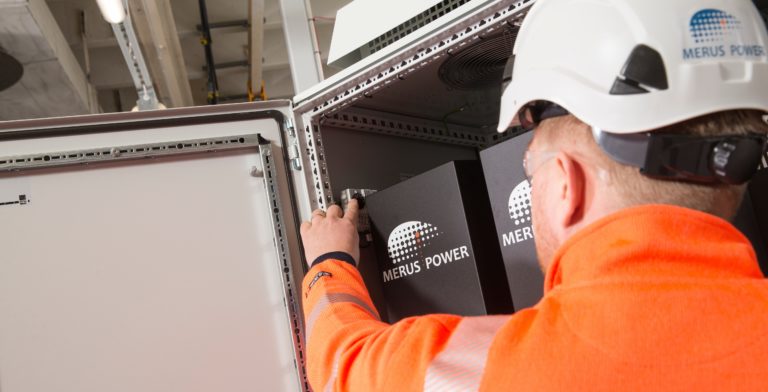
Merus® A2 – Active Harmonic Filter
Merus® A2 is a scalable, versatile, and durable active harmonic filtering solution designed and manufactured in Finland using innovative Merus® technology.
- Harmonic compensation
- Dynamic reactive power compensation
- Current balancing
- Neutral current compensation
- Harmonic-specific resonance damping
This makes Merus® A2 a comprehensive power-quality solution rather than a device designed to address only a single fixed harmonic problem.
Merus® A2 is available as module and cabinet solutions from 50 to 800 A. More than 5,000 active harmonic filter modules have already been installed, and the technology is designed and manufactured in Finland.
Its harmonic control responds in under 100 microseconds, allowing the filter to react quickly even when electrical conditions change rapidly.
What if the problem is harmonic resonance?
Harmonic current is not always the whole story. In some electrical networks, the network impedance can amplify certain harmonic frequencies. This is known as harmonic resonance, and it can result in excessive harmonic voltage distortion even when harmonic currents alone do not appear unusually high.
Merus® A2 technology can provide harmonic-specific resonance damping in addition to conventional harmonic current compensation. .
A cleaner electrical network starts with understanding the problem
An active harmonic filter is a dynamic solution for reducing harmonic distortion in modern electrical networks. It measures harmonic currents, generates an opposite compensating current, and continuously adapts as operating conditions change. This makes active harmonic filtering particularly well-suited to electrical systems with VFDs, UPS systems, and other variable non-linear loads.
But successful harmonic mitigation is not only about installing a filter. The electrical network must first be understood, the actual harmonic problem identified, and the solution sized correctly.
Merus Power combines power quality engineering expertise with the Merus® A2 Active Harmonic Filter, providing a scalable solution that goes beyond basic harmonic compensation. Whether the challenge is harmonic distortion, reactive power, current unbalance, or harmonic resonance, Merus® A2 provides one flexible platform for improving power quality.
Anything on your mind? Let’s talk!

Riku Kalliomaa
Head of Sales, Power Quality Products
Global