
Riku Kalliomaa
Head of Sales, Power Quality Products
Global
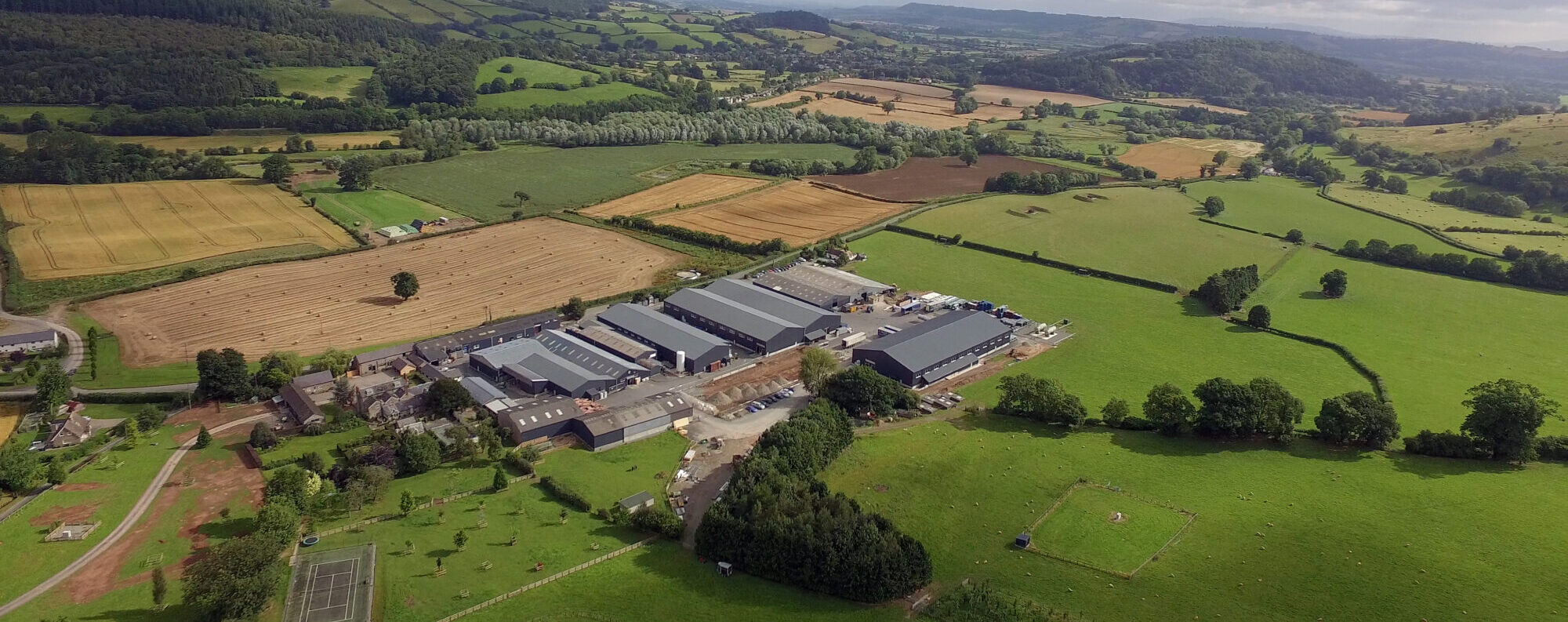
Radnor Hills Water began in 1990 in the picturesque Welsh countryside and has grown into a large multi-plant production and distribution centre, employing nearly 300 people. The large production facility houses nine production lines, consisting of various types of machinery, including large inverter-driven equipment.
As part of the company’s environmental policy, Radnor Hills Water recently installed a new solar array. The new system brought several benefits, but unfortunately also led to some power quality challenges.
The new solar equipment, through no fault of its own, contributed to issues such as rapid fluctuations in supply, inverter faults, efficiency variations and other power quality issues. These problems were further exacerbated by the site being at the end of the supply line.
The site already had around 600 kVAr of traditional contactor-switched power factor correction (PFC) installed, but the engineering team suspected that it was not functioning correctly. These issues, along with the company’s plans to expand into another factory, prompted a discussion with Merus Power’s local partner, Power Capacitors.
The Power Capacitors team attended the site and assessed the existing equipment. The current PFC installation was unable to operate at the speeds required to keep up with the rapid changes in loading. It was also unable to cope with, or help mitigate, the increasing levels of harmonic distortion encountered on site.
It was determined that the existing equipment was no longer fit for purpose following the installation of the solar array. A short load survey was carried out on site, which showed elevated levels of both current and voltage harmonic distortion, as well as a less-than-ideal power factor.
Radnor Hills Water wanted a solution that would not only address the existing power quality issues but also provide sufficient capacity for future expansion. The decision was made to remove the existing power factor correction equipment and replace it with a 1200 A active harmonic filtering system built by Power Capacitors using Merus® A2 Active Harmonic Filter modules.
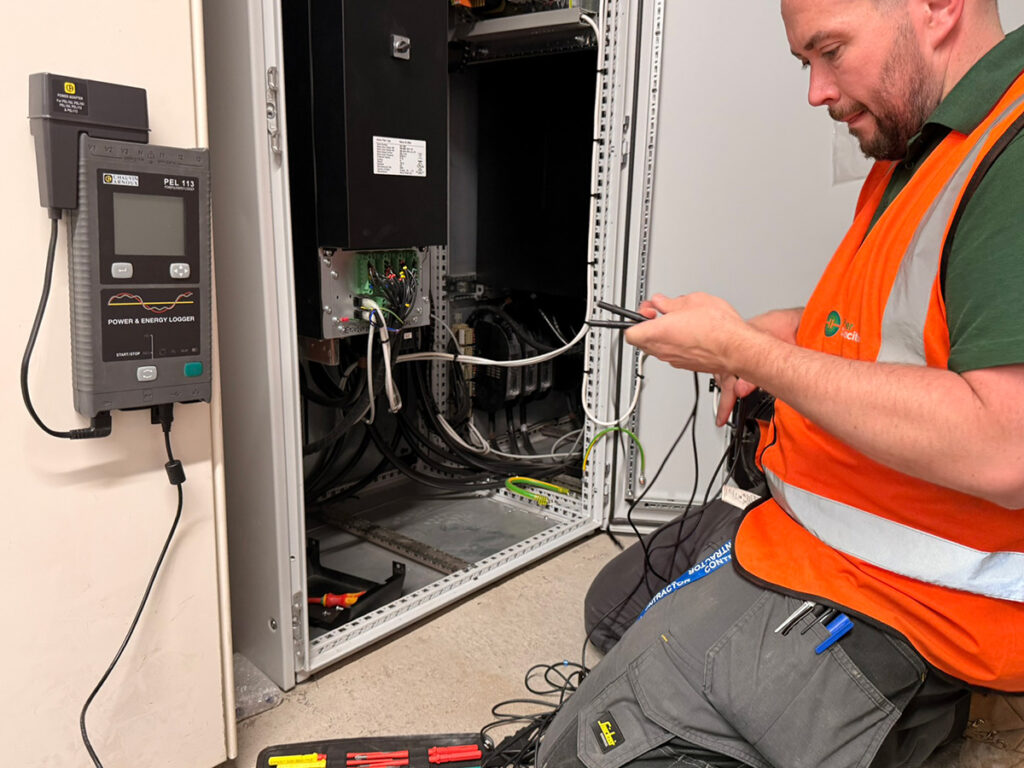
The system was designed to provide stepless power factor correction, active harmonic mitigation and sufficient capacity for future needs. At 1200 A, it was the largest active harmonic filter system Power Capacitors had built to date.
Food & Beverage industry, beverage production
Wales, United Kingdom
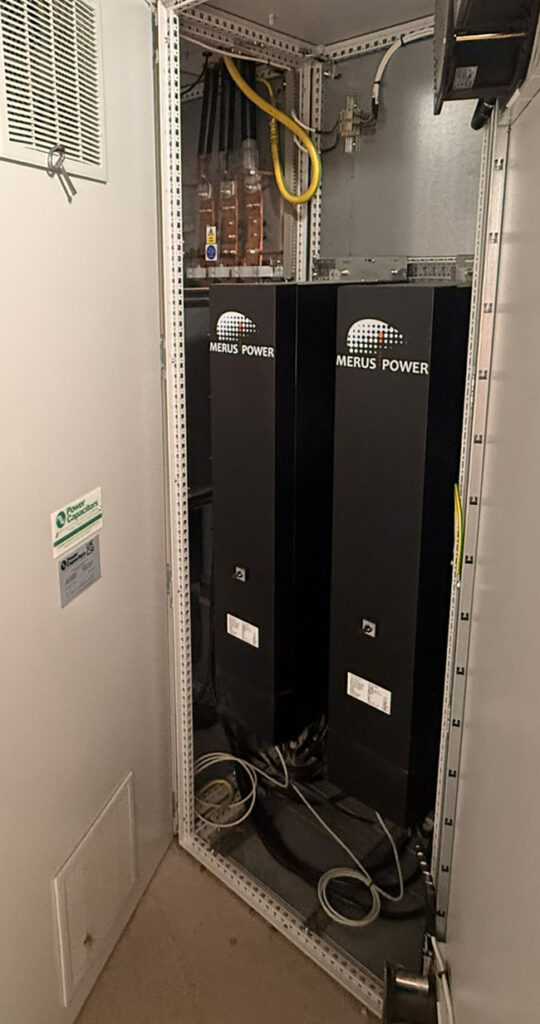
The system consists of six 200 A Merus® A2 modules connected to operate as a single, seamless 1200 A system, all controlled through a single HMI. Power Capacitors designed and manufactured the complete system, including the enclosure, cooling system, and module mounting. A panel-mounted energy meter was also included at the customer’s request to enable continuous monitoring and regular data downloads.
The installation made use of the existing cabling from the PFC cubicles, including the existing gland plate. This enabled a straightforward installation process without interrupting production, meaning the factory experienced no downtime during the installation.
Once the installation was complete, a short post-installation power quality survey was carried out to see the results in real time. Measurements were taken with the active harmonic filtering system switched off and again on the same day after the system was switched on. The results showed a clear improvement in harmonic distortion and power factor.
| Metric | Before | After |
|---|---|---|
| THDi | 10.66% | 2.51% |
| THDu | 2.16% | 1.22% |
| Power factor | 0.977 | 0.9999 |
The improvement can also be clearly seen in the measurements taken during commissioning. The graphs show the exact moment the active harmonic filtering system was switched on, with an immediate reduction in harmonic distortion and improvement in power factor.
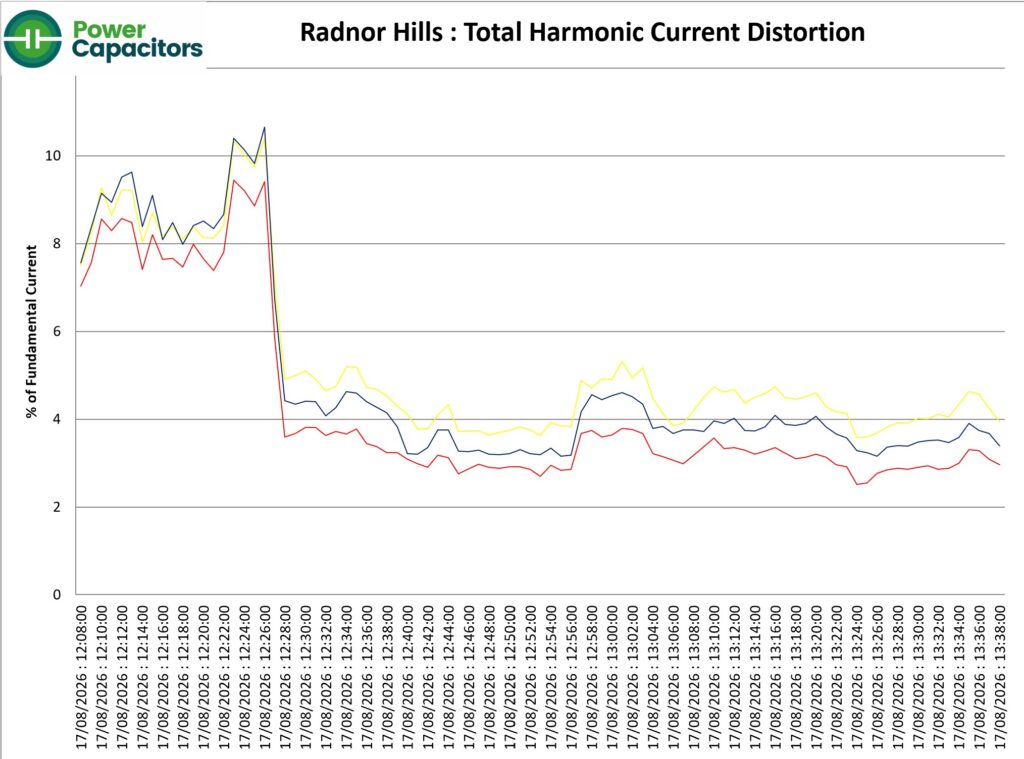
Total Harmonic Current Distortion (THDi) before and after turning active harmonic filtering on.
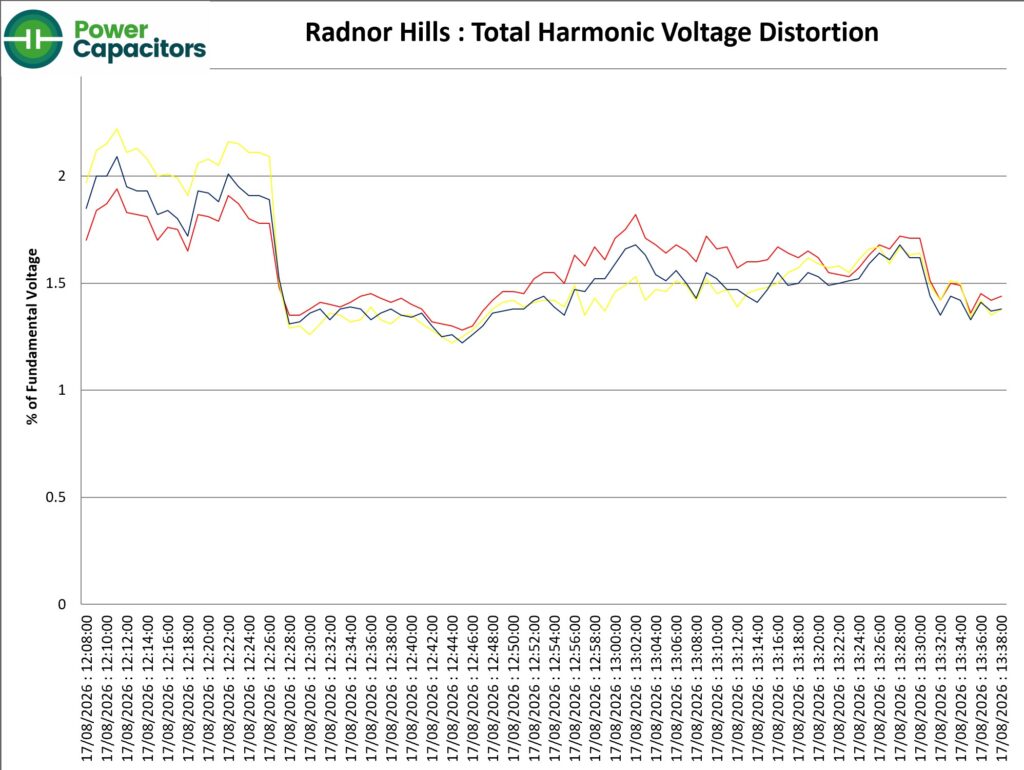
Total Harmonic Voltage Distortion (THDi) before and after turning active harmonic filtering on.
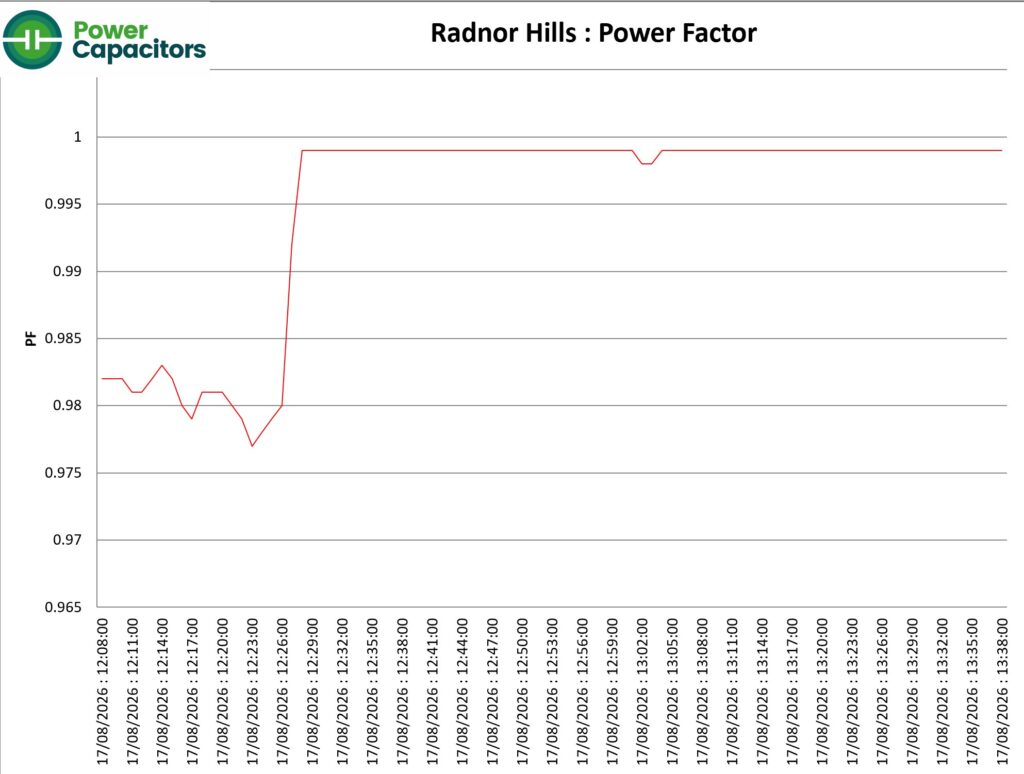
Power Factor (PF) before and after turning active harmonic filtering on.
With the new system in operation, Radnor Hills Water has a dynamic power quality solution that responds to changing operating conditions while providing capacity for the company’s planned future expansion. The project demonstrates how changes to an electrical network, such as the addition of solar generation, can change its power quality requirements. Traditional power factor correction equipment that had previously met the site’s needs could no longer respond adequately torapidly changing conditions.
By replacing the existing PFC equipment with a dynamic active harmonic filtering solution based on Merus® A2 technology, Radnor Hills Water was able to significantly reduce harmonic distortion, achieve near-unity power factor, and prepare its electrical network for future expansion.
Head of Sales, Power Quality Products
Global
United Kingdom