
Practical comparison: Active Front End drives vs. centralized active harmonic filtering
In this blog, I will discuss methods for mitigating harmonic distortion caused by Variable Frequency Drives (VFDs), also known as Variable Speed Drives (VSDs) or frequency converters.
VFDs are generally used to control the speed of AC motors in various industrial and commercial applications. In addition to precise process control, the use of VFDs brings substantial energy savings, especially in so-called variable-torque applications, such as pumps and fans, which are common in industrial liquid handling and HVAC.
Standard six-pulse VFDs generate harmonic distortion in electrical networks, typically in the range of 25–45% Total Harmonic Distortion of current (THDi). As the awareness of the importance of energy efficiency has increased, the usage of VFDs has grown substantially. According to the IEEE 519 power quality standard, harmonic current distortion should be controlled to maintain power quality and ensure reliable operation of electrical systems. In industrial power systems, a THDi level below 5% is generally considered best practice, although values between 5% and 8% are often regarded as acceptable depending on the application and utility requirements.
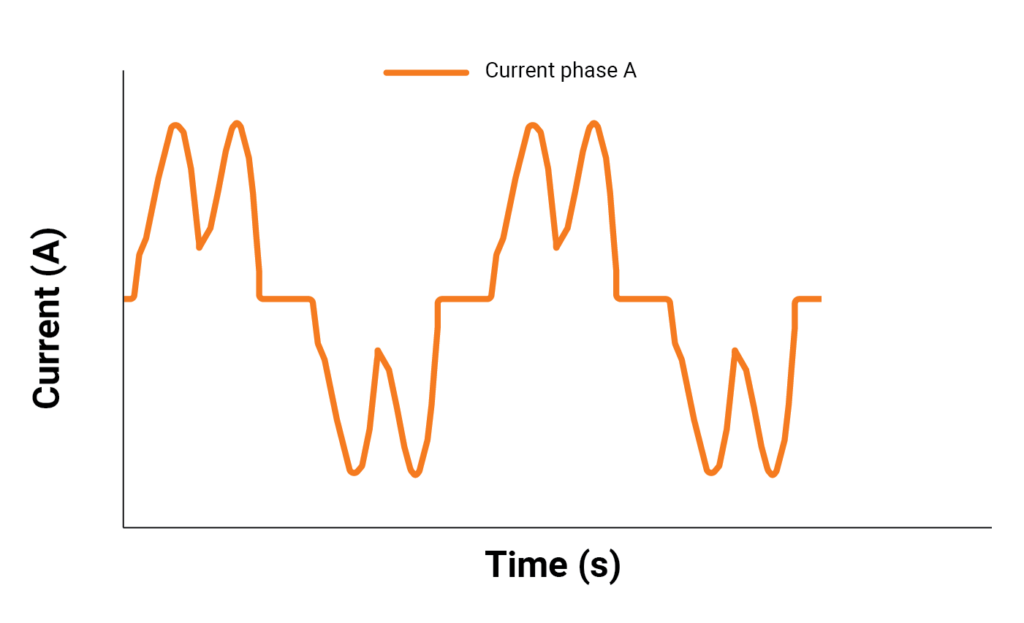
For a deeper look at IEEE 519 requirements and practical considerations related to harmonic limits, you can also explore our blog on the interpretation of maximum demand current and common compliance pitfalls.
Many ways to compensate harmonics
Active Front End drives (AFEs) are special VFD designs in which, rather than using diodes in the rectifier to convert the incoming AC power to DC, they use insulated-gate bipolar transistors (IGBTs). The AFE monitors the input current waveform and shapes it into a sinusoidal waveform, reducing total harmonic distortion (THD) to 5% or less and achieving a near-unity power factor. Some VFD manufacturers refer to AFE drives as Ultra Harmonic Drives.
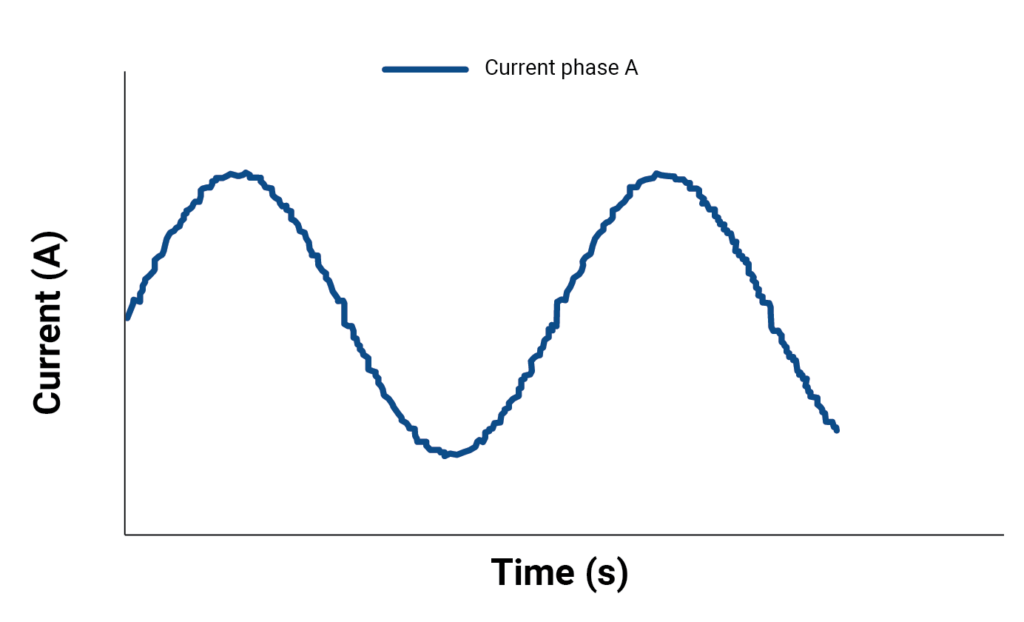
Although AFE drives were created for regenerative braking applications, enabling drives to feed energy back into the electric network, the technology also provides mitigation for harmonics generated by VFDs. There are also other alternative technologies available for optimized mitigation of standard, six-pulse VFD harmonics.
The most common conventional approach is to use Passive Harmonic Filters (PHFs) tuned to the dominant harmonic frequencies produced by standard six-pulse VFDs (e.g., 5th and 7th). While passive filters are cost-effective and widely used, their performance is fixed to the harmonic orders for which they are designed and does not adapt to varying load conditions. They also create resonant frequencies in the network, increasing the risk for harmonic resonance that can threaten operations and damage equipment.
In contrast, Active Harmonic Filtering (AHF) solutions dynamically adjust their compensation level based on real-time load demand. As a result, active systems typically provide superior harmonic performance and improved energy efficiency compared to passive filtering methods.
AFE and AHF technologies explained
Active Front End (AFE) drives
Some VFD manufacturers offer Active Front End drive configurations. An AFE drive incorporates an IGBT-based rectifier stage in addition to the IGBT inverter used for motor control. This topology significantly reduces harmonic distortion at full-load rate and enables regenerative operation. However, the increased design complexity and higher component count of AFE drives lead to higher system costs and a potentially higher risk of failure compared to conventional VFDs.
How Active Harmonic Filters work
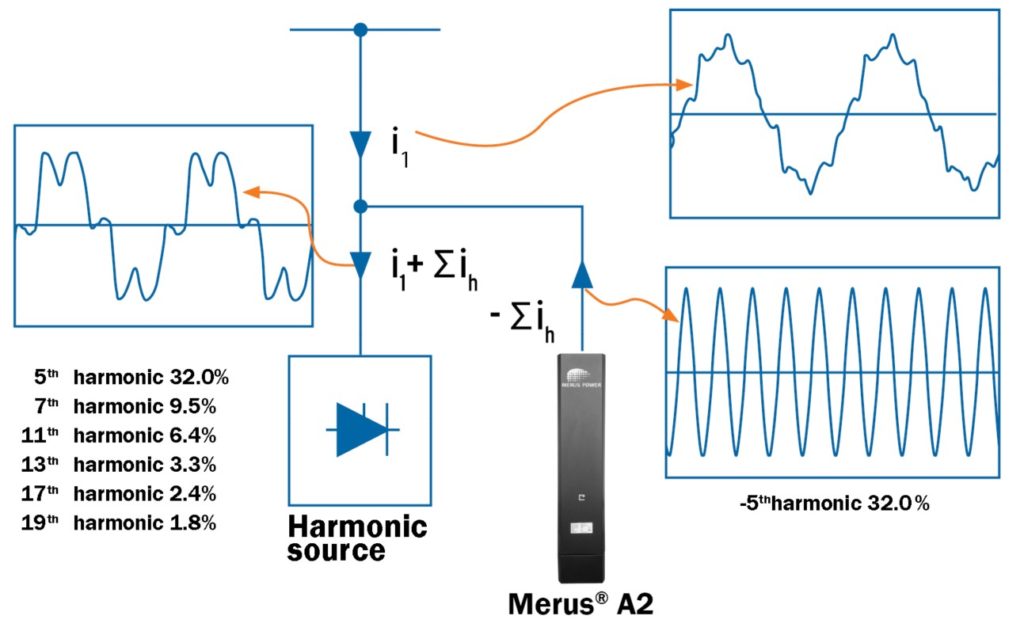
Active Harmonic Filters provide an alternative active mitigation method. An AHF is an IGBT-based power electronic inverter specifically designed to compensate harmonic distortion. Its operating principle is analogous to that of noise-canceling headphones: the filter measures the harmonic currents in the network and injects an equal-and-opposite counter-waveform to cancel the distortion.
Advanced Active Harmonic Filter capabilities
Advanced solutions, such as three-level active harmonic filters, offer highly efficient harmonic compensation with reduced switching losses and improved waveform quality. Modern AHFs are typically equipped with advanced Human-Machine Interfaces (HMIs), enabling users to selectively target specific harmonic orders and define the desired mitigation level. In many applications, mitigating only the most critical harmonics provides the optimal balance between power quality improvement and economic efficiency.
Centralized and decentralized Active Harmonic Filter configurations
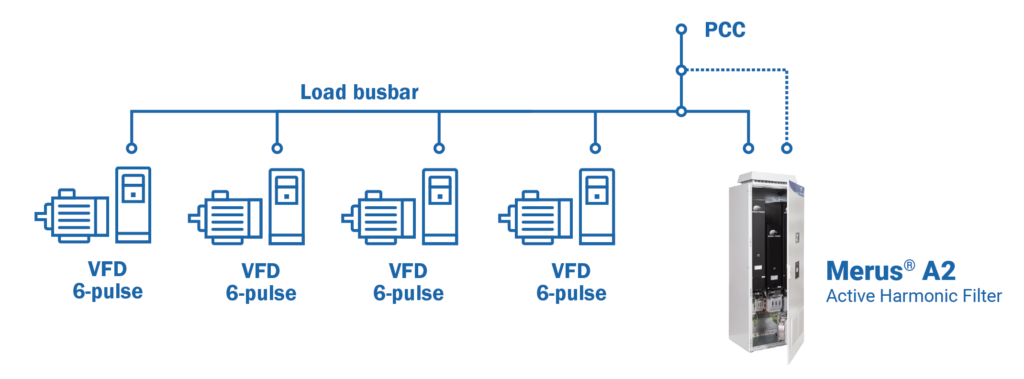
Active harmonic filters are connected in parallel with VFD loads and can be implemented either as decentralized or centralized systems. In a decentralized topology, individual AHFs are installed for each VFD or load group. In a centralized configuration, a single AHF monitors the overall harmonic distortion at the Point of Common Coupling (PCC) and compensates harmonics generated collectively by multiple VFDs. Centralized mitigation can provide a more economical solution for facilities with numerous non-linear loads operating simultaneously.
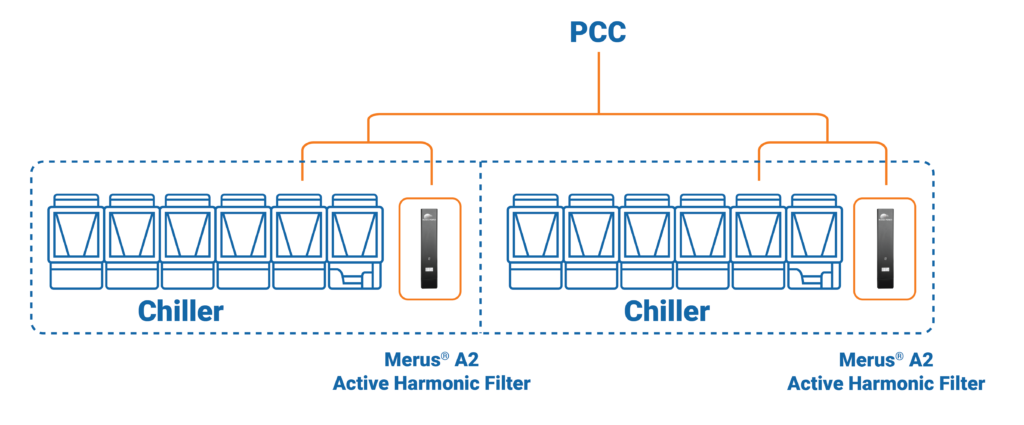
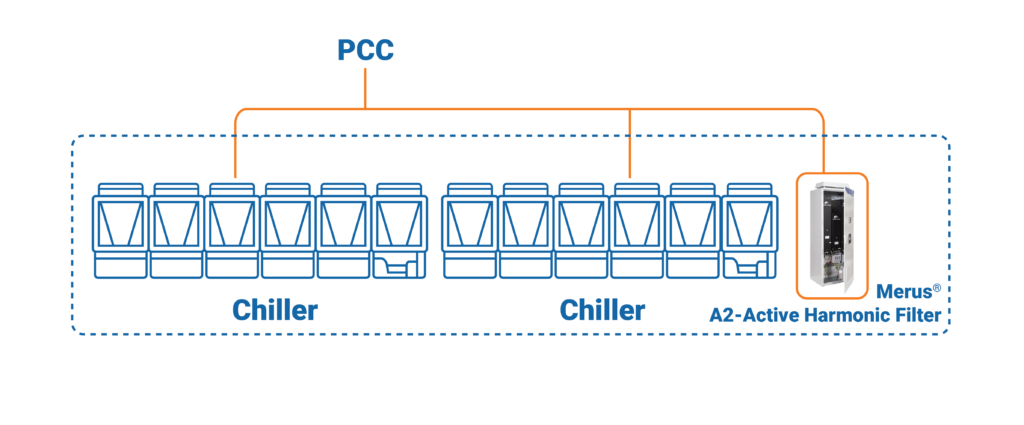
Benefits of centralized harmonic mitigation compared to individual mitigation
Lower hardware investment
In industrial pumping and water treatment applications, system redundancy is a fundamental engineering requirement. Modern energy-efficient pumping systems typically utilize AC motors controlled by Variable Frequency Drives to regulate flow and optimize energy consumption. In critical infrastructure, such as water and wastewater treatment facilities, duty/standby configurations are standard practice to ensure operational continuity and reliability. A typical arrangement may consist of three pumps operating simultaneously with one additional pump in standby mode.
In such systems, centralized harmonic mitigation with a single AHF for the entire VFD installation often offers a simpler, more economical, and more technically efficient solution than decentralized mitigation, where each VFD is equipped with its own harmonic mitigation system.
With a centralized approach, the AHF is dimensioned according to the maximum number of simultaneously operating pumps rather than the total installed pump count. For example, in a system containing four pumps where only three pumps operate under normal conditions and one remains in standby, the centralized AHF only needs to compensate the harmonic distortion generated by the three active VFDs. This reduces both Capital Expenditure (CAPEX) and overall system complexity.
Eliminating unnecessary hardware
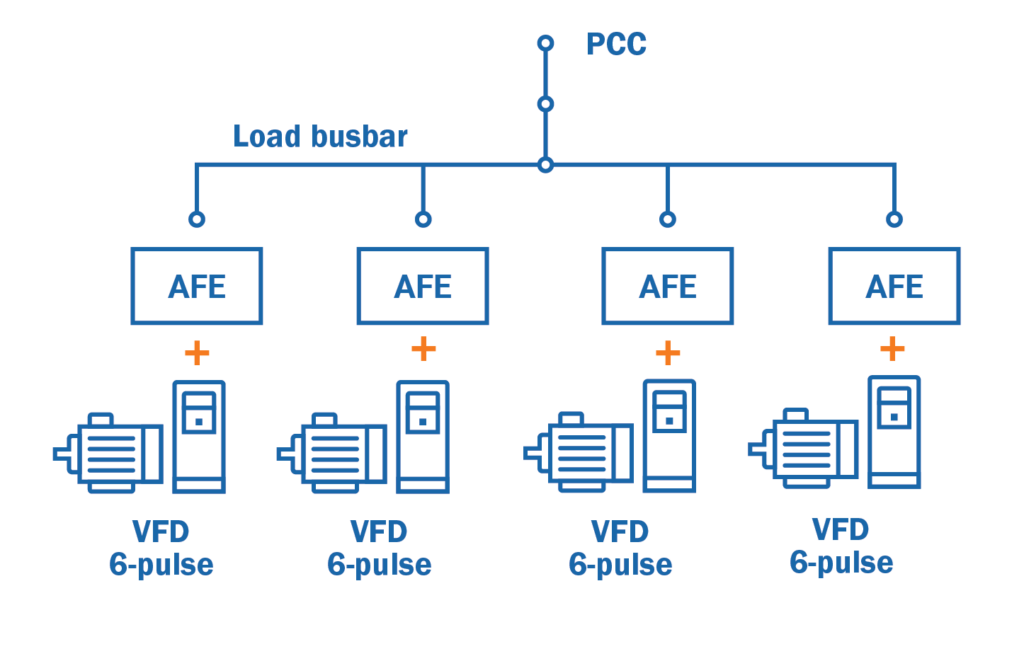
By comparison, decentralized mitigation methods, such as AFE drives or individual AHFs installed for each VFD, require harmonic mitigation hardware to be installed on every drive, including standby units that may remain idle for extended periods. Consequently, part of the investment remains underutilized during normal operation.
Adaptive harmonic compensation across the installation
A centralized AHF system also provides operational flexibility. The filter continuously monitors the harmonic content at the Point of Common Coupling (PCC) and automatically adjusts its compensation level based on real-time load conditions. As pumps are added or removed from operation to match process flow requirements, the AHF dynamically adjusts its harmonic compensation performance without requiring manual intervention. An additional benefit of the centralized AHF system is that it mitigates harmonics beyond those created by VFDs, as seen in PCC. There may be other devices, such as EC Fans or UPS, in the network.
Improved reliability with centralized harmonic mitigation
From a reliability perspective, centralized harmonic mitigation does not compromise process continuity. In the unlikely event of an AHF failure, the pumping process itself remains operational because the VFDs continue functioning normally. The only consequence is a temporary increase in harmonic distortion levels within the electrical network until the filter is restored to service. If desired, a redundant centralized active filter can be added in the configuration to further increase reliability. This is still more cost-effective than an active filter-per-drive configuration.
Lower total cost of ownership
In many applications, the most cost-effective solution is therefore a combination of standard six-pulse VFDs with a centralized AHF, rather than using individual AFE drives for each motor. Since AFE drives typically cost approximately 1.4 to 1.7 times more than standard VFDs, the centralized mitigation approach can provide substantial cost savings while maintaining acceptable harmonic performance.
Example cost comparison
To illustrate the practical differences between harmonic mitigation approaches, the following example compares three common system architectures in a typical pumping application.
System configuration:
- 4 VFD-controlled pumps
- 3 pumps operating simultaneously
- 1 pump in standby
1. Decentralized mitigation using AFE Drives
- 4 × AFE VFDs
- Estimated AFE cost factor: 1.5 × standard VFD cost
Calculation: 4×(1.5×1000)=6000 units
2. Decentralized mitigation using standard VFDs + individual AHFs
- 4 × standard VFDs
- 4 × individual AHFs
Calculation: (4×1000)+(4×500)=4000+2000=6000 units
3. Centralized mitigation using standard VFDs + one central AHF
- 4 × standard VFDs
- 1 × centralized AHF
Calculation: (4×1000)+1000=5000 units
The example demonstrates that a centralized harmonic mitigation architecture can reduce total system cost while simultaneously simplifying installation, reducing component count, and improving overall utilization of the harmonic mitigation equipment.
Serviceability
Standard six-pulse VFDs have become the dominant solution in industrial motor control applications, including water and wastewater treatment facilities. Due to their widespread adoption, standard VFDs are readily available globally, and maintenance personnel are generally familiar with their installation, commissioning, and servicing. In many cases, replacement units can be sourced quickly from local inventories, making lifecycle support practical even in remote industrial locations.
The same level of availability and service infrastructure does not always apply to Active Front End (AFE) drives. Because AFEs incorporate more complex power electronic topologies and specialized control architectures, maintenance and troubleshooting often require highly trained service personnel with specific product expertise. In remote locations, where many pumping stations and wastewater treatment plants are situated, access to qualified technicians and spare AFE units may be limited, potentially increasing the risk of downtime and maintenance costs.
Modern Active Harmonic Filters, particularly advanced IGBT-based designs, are typically modular and fully serviceable with manufacturer support available worldwide. Importantly, an AHF operates independently from the VFD motor control function. Therefore, in the event of an AHF failure, the VFDs and associated pumping processes continue operating normally. The only consequence is a temporary increase in harmonic distortion levels until the harmonic filter is restored to service.
Mitigation scope
A centralized Active Harmonic Filter provides harmonic compensation for the entire electrical network section connected at the Point of Common Coupling (PCC). This allows the AHF to mitigate harmonic distortion generated not only by VFDs, but also by all other nonlinear loads connected to the system.
By contrast, an Active Front End (AFE) drive can only compensate for the harmonic distortion generated by the individual drive itself. It has no capability to mitigate harmonics originating from other equipment within the facility.
Typical nonlinear loads commonly present in industrial and commercial installations include:
- Electronically Commutated (EC) fans
- LED lighting systems
- Fluorescent lighting
- Computer and IT equipment
- Switched-mode power supplies
- UPS systems and automation equipment
As modern facilities increasingly adopt energy-efficient electronic devices, the cumulative harmonic contribution from auxiliary loads can become significant. A centralized AHF, therefore, provides a broader and more comprehensive power-quality solution than decentralized AFE-based mitigation.
Total cost of ownership
The current rating of an AFE drive must match the Full Load Amperes (FLA) required by the motor application. Consequently, the AFE rectifier stage is dimensioned for the full motor current, resulting in a converter size comparable to that of the associated six-pulse VFD.
In contrast, the current rating required for an Active Harmonic Filter is substantially lower because the filter compensates only the harmonic component of the current rather than the total motor load current. In typical VFD applications, the required AHF current rating is approximately 45% of the nominal current of the equivalent six-pulse VFD. As a result, the optimized AHF solution is physically smaller and requires fewer power electronic components than an equivalent AFE system.
The smaller size of AHFs provides several practical advantages, including:
- Reduced cabinet dimensions
- Lower cooling requirements
- Simplified panel design
- Reduced installation complexity
- Lower space utilization in electrical and control rooms
These benefits become even more significant when centralized harmonic mitigation is implemented for multiple VFDs within the same system.
Because the centralized AHF topology typically requires lower total installed converter capacity, the overall CAPEX is generally lower compared to decentralized AFE solutions. The lower initial investment, combined with reduced installation and maintenance costs, contributes to shorter payback periods and improved Return on Investment (ROI).
Proven in practice: Merus Power
Through numerous harmonic mitigation projects, Merus Power has gained extensive experience in solving power quality challenges across a wide range of industrial applications. Based on this experience, centralized active harmonic filtering has proven to be one of the most effective and economical approaches for managing harmonics in multi-drive installations.
The Merus® A2 Active Harmonic Filter platform has been developed to meet these requirements, providing efficient harmonic mitigation, operational flexibility, and reliable performance in demanding environments while helping customers optimize both investment and lifecycle costs.
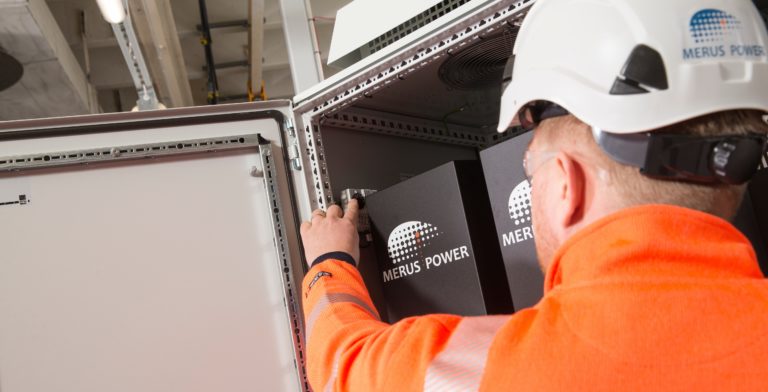
Merus® A2 – Active Harmonic Filter
Merus® A2 is a scalable, versatile, and durable active harmonic filtering solution designed and manufactured in Finland using innovative Merus® technology.
Conclusion
Centralized Active Harmonic Filter solutions provide a technically robust and economically optimized approach for harmonic mitigation in modern industrial power systems. Compared to decentralized mitigation using Active Front End drives, centralized AHFs offer advantages in serviceability, flexibility, mitigation scope, physical footprint, and overall cost efficiency.
For customers, system integrators, and panel builders alike, centralized active harmonic mitigation is often the most practical and economically attractive solution for achieving compliant power quality performance in installations with multiple nonlinear loads.
“Centralized active harmonic filter is the most economical solution for customers, integrators, and panel builders alike.”
Riku Kalliomaa, Head of Sales, Merus Power
Anything on your mind? Let’s talk!

Riku Kalliomaa
Head of Sales, Power Quality Products
Global